AUTHOR
Guardare Announces Strategic Partnership with Virtuo Group to Support Texas Department of Information Resources (DIR) Contract
Read More ->.svg)




Some of the most useful cybersecurity conversations do not happen on a stage or in a sales deck. They happen when experienced people start comparing notes and being honest about what is not working in the industry.
That’s the conversation Dane and Lars had when they joined the Secure Insights with NDK Cyber podcast. What starts as a discussion about their backgrounds quickly turns into a familiar frustration for many security teams: knowing there is risk in the environment, but not having a clear way to see it, prioritize it, and act on it.
This podcast was hosted by NDK Cyber, a cyber talent firm that helps organizations hire and scale security teams in challenging markets. This episode follows that spirit. It is not a product pitch. It is a candid discussion about noise, visibility, and how AI can support security teams without taking control away from them.
Listen to the full episode here: Moving From Reactive to Proactive Security with Guardare Co-Founders.
If the perspectives in this episode feel grounded, it is because both founders have lived the problems they are describing.
Lars Letonoff, CEO and co-founder of Guardare, has spent decades in cybersecurity. This is his third startup. He was previously one of the earliest employees and then Co-President and Chief Revenue Officer at KnowBe4, helping grow the company from pre-revenue to unicorn status, through IPO, and then a take-private transaction.
Dane Fiori, President and founder of Guardare, brings more than 15 years of enterprise and international SaaS sales experience. As Senior Vice President of Sales at KnowBe4, he helped build their enterprise and international business from the ground up, working directly with organizations struggling to operationalize security at scale.
Together, they bring a rare perspective. They have seen what security looks like when there is no dedicated team, and what it looks like when dozens of tools still fail to provide clarity.
A consistent theme throughout the episode is that most organizations do not suffer from a lack of security technology. They suffer from a lack of coordination.
For small and mid-sized businesses, Dane explains, security often lands on the shoulders of an already overextended IT team. Under a thousand employees, many organizations do not have a full-time security professional. One or two people are expected to manage infrastructure, support users, and protect the business at the same time. The result is not negligence, but uncertainty about what to do first.
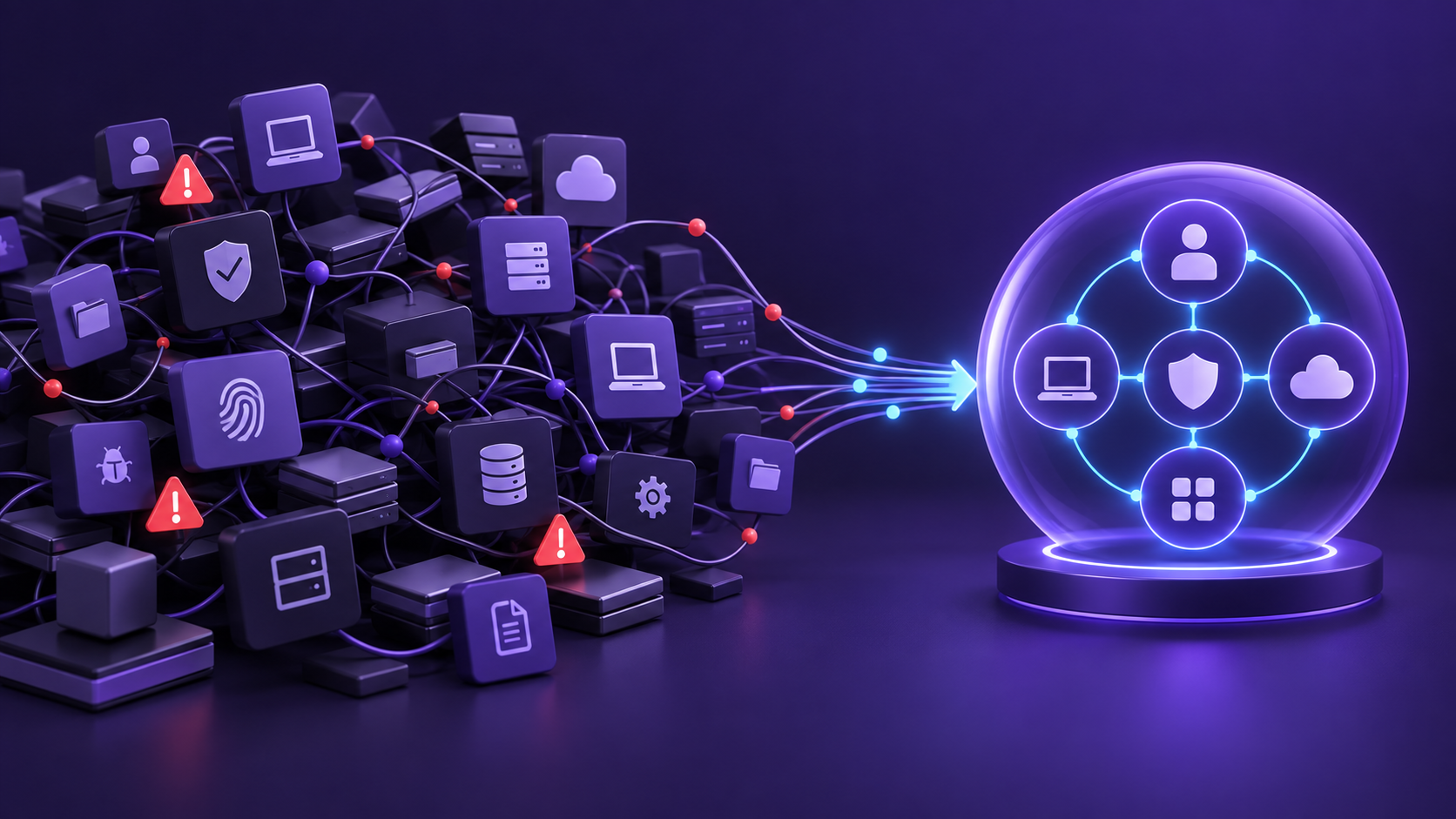
Enterprises face a different version of the same problem. Multiple teams manage identity, endpoints, cloud security, compliance, and network controls. Each team has its own dashboards and alerts. Over time, that creates alert fatigue, overlapping tools, misconfigurations, and siloed data.
As Lars notes in the episode, many breaches are not caused by unknown threats. They are caused by signals that were already present in the logs, but never connected. When teams spend most of their time trying to find problems, there is little time left to fix them.
Guardare was built to address this reality without adding more noise.
The platform takes a unified exposure management approach, looking holistically across people, devices, and software. It connects internal telemetry to external intelligence and security frameworks, then evaluates everything together.
Rather than surfacing more alerts, Guardare prioritizes what matters most. When a critical CVE is released, the platform identifies which devices are affected, which users are tied to those devices, and what actions will reduce risk fastest. It then provides clear, step-by-step remediation guidance.
With more than 175 integrations, Guardare takes millions of data points and translates them into a short, ordered list of actions that security teams can actually execute.
The conversation also tackles one of the most misunderstood topics in security today: AI.
Dane and Lars are clear that AI is essential, but fully autonomous security operations are not ready. Adversaries are already using agents to automate attacks. Defensive agents can be manipulated. Large language models can hallucinate or misrepresent outcomes.
Guardare’s approach is deliberately different. Its AI is built in-house and designed to collaborate with humans, not replace them. The platform performs the heavy analytical work that humans cannot do at scale, then presents the findings with context, evidence, and clear remediation steps.
Over time, Guardare plans to introduce limited AI-assisted task execution with strict guardrails. Certain tasks, such as launching a phishing test, can safely be automated. Others, such as reconfiguring critical infrastructure, remain firmly in human hands.
The episode comes to life through real examples that illustrate why unified exposure management matters.
In one case, a customer initially believed Guardare was wrong about encryption gaps. Their device management system showed everything was compliant. A deeper review of the logs revealed the truth. A reboot had left 37 devices in a pending state within the encryption tool. Intune believed the devices were encrypted, but the encryption process never completed. The risk was real, and it had gone unnoticed.
Another example involved a phishing incident tied to a missing MFA configuration. Guardare had already flagged the issue as high risk. When a compromised login appeared from an unusual location, the platform connected the dots and recommended immediate action. What could have been dismissed as a random alert became a clear narrative with a clear fix.
Not every story ends with red flags. In one organization, nearly everything looked green. Guardare still delivered value by validating the environment and providing a prioritized roadmap for what to tackle next. For leadership teams, that visibility and confirmation mattered just as much.
Lars also highlights a telling statistic. Many teams spend roughly 75% of their time identifying and verifying issues, and only 25% remediating them. Guardare’s goal is to flip that ratio, so teams spend most of their time reducing risk.
One of the most powerful ideas discussed is the ability to interact with your environment conversationally.
Dane describes asking questions like who has had a password breach or failed a phishing test in the last six months. That list can then be narrowed to users with administrative access, and narrowed again to those tied to devices with known vulnerabilities.
The platform does not just return names. It provides prioritized recommendations, ordered by impact. Instead of hunting across tools, leaders can reason about risk the way an experienced CISO would, but at machine speed.
For SMB IT leaders, this episode shows how to gain the capabilities of a full-time security team without adding headcount.
For enterprise CISOs, it offers a practical way to cut through tool sprawl, misconfigurations, and missed signals.
For MSPs and MSSPs, it demonstrates how a multi-tenant, AI-assisted platform can scale expertise while maintaining control.
For everyone, it delivers an honest view of what AI should and should not do in cybersecurity.
If your team feels buried in alerts, dashboards, and reports, this conversation will feel familiar. Dane and Lars do not promise shortcuts. They explain why security feels hard today and how it can be made more manageable.
Listen to the full episode of Secure Insights with NDK Cyber: Moving From Reactive to Proactive Security with Guardare Co-Founders to hear the complete conversation. Then, when you’re ready, schedule a Guardare demo to see how unified exposure management looks inside your own environment.
The Guard Posts is your go-to source for the latest cybersecurity news, industry events, and exclusive updates from Guardare.