AUTHOR
Guardare Announces Strategic Partnership with Virtuo Group to Support Texas Department of Information Resources (DIR) Contract
Read More ->.svg)



Annual security audits used to feel like a reasonable rhythm.
Once a year, the business would bring in a consultant, review policies, scan systems, document findings, clean up the biggest issues, and move on.
For a lot of small and mid-sized businesses, that was the cybersecurity plan.
Not perfect.
But good enough.
That worked better when environments changed slowly and attackers had more friction. It took time to find targets. It took skill to connect weaknesses. It took effort to repeat the same attack across hundreds or thousands of companies.
That friction is going away.
AI is changing the economics of cyberattacks. It helps attackers move faster, research targets faster, write better phishing messages, generate code, test ideas, and connect small weaknesses that used to require more experience to find manually. Google’s Threat Intelligence Group recently reported that attackers are beginning to use AI not just as a research tool, but as part of attack workflows that can help identify vulnerabilities, generate code, and make decisions with limited human oversight. (Reuters)
That should make every SMB pay attention.
Because the issue is not just that attackers are getting more advanced.
It is that attacks are getting cheaper to run.
Large enterprises are still valuable targets.
They have more data, more revenue, more systems, and bigger potential payouts. But they also usually have bigger security teams, larger budgets, stronger monitoring, dedicated incident response plans, and more mature controls.
SMBs often have the same types of technology without the same level of protection.
They use Microsoft 365. They use cloud apps. They have remote employees. They have contractors. They have finance systems, customer data, HR data, devices, SaaS tools, admin accounts, and third-party integrations.
What they usually do not have is a fully staffed security team watching how all of it connects.
That changes the math for attackers.
Why spend weeks trying to break into a hardened enterprise when AI can help find hundreds of smaller companies with exposed systems, reused passwords, misconfigured cloud services, stale accounts, or unmanaged devices?
The payout may be smaller.
The effort is also smaller.
And the volume is much higher.
CrowdStrike’s 2025 SMB cybersecurity survey found that SMB leaders are highly aware of cyber risk, but many still struggle with limited resources, outdated tools, and inconsistent execution. Only 42% reported regular employee security training, and only 11% reported using AI-powered security tools. (CrowdStrike)
That gap is exactly what attackers are looking for.
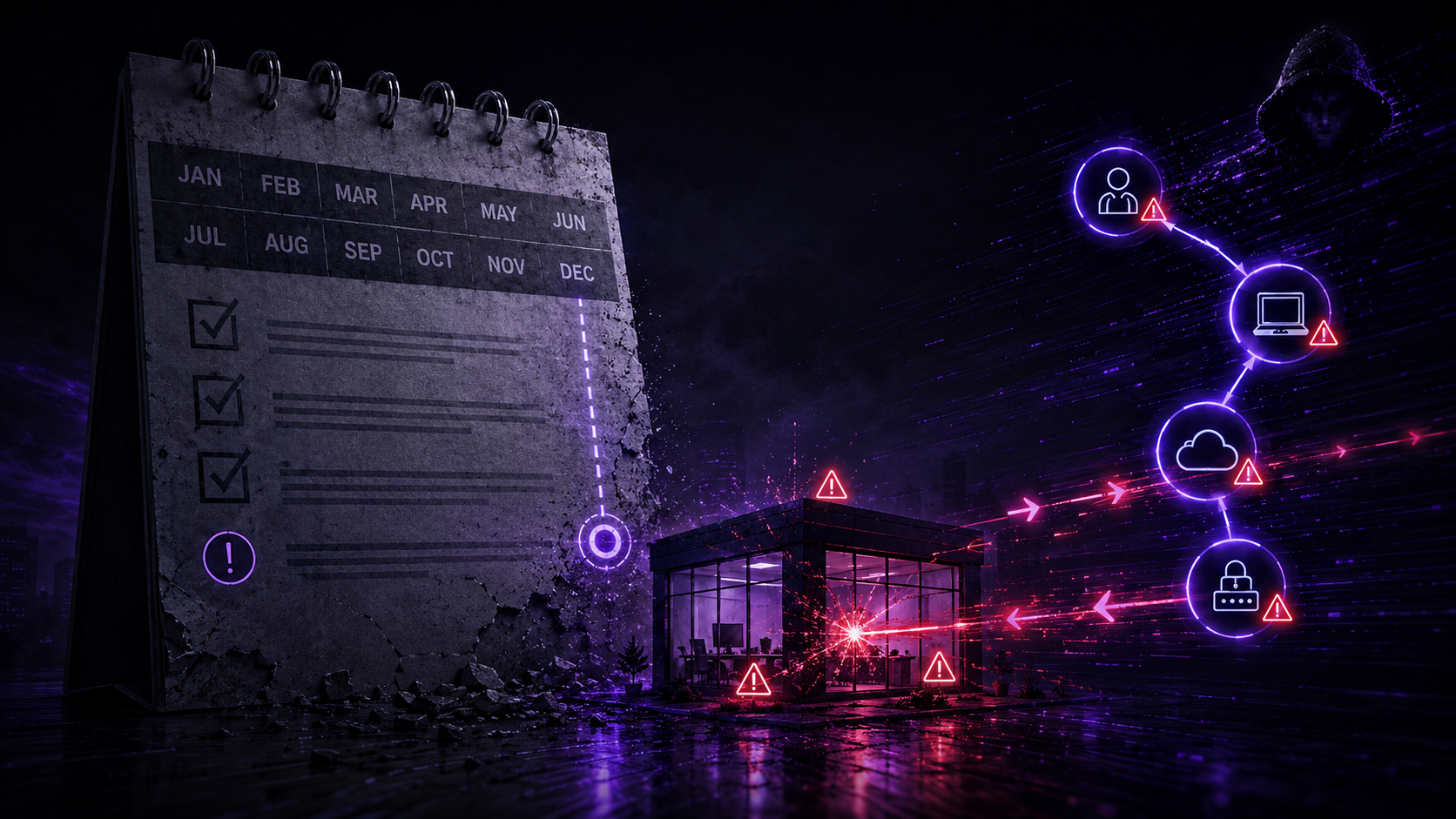
The problem with a yearly audit is simple.
It is a snapshot.
It tells you what the environment looked like at one point in time. Maybe that point in time was accurate. Maybe the findings were useful. Maybe the remediation plan made sense.
But the environment does not stay still.
A new employee starts.
A contractor keeps access longer than planned.
A device falls out of MDM.
A security tool is purchased but never fully deployed.
A firewall rule gets opened for a project and never closed.
A SaaS app gets connected with broad permissions.
An admin account is created for convenience.
A password shows up in a breach.
None of that waits for the next audit.
And attackers are not waiting either.
SonicWall’s 2026 Cyber Protect Report found that high and medium severity attacks increased more than 20%, automated bots generated more than 36,000 vulnerability scans per second, and identity, cloud, and credential compromise accounted for 85% of actionable security alerts. (SonicWall)
That is not an annual problem.
That is a daily problem.
Most SMBs do not suddenly become exposed overnight.
They drift into exposure.
That is the part people miss.
Security drift happens quietly. It usually looks like normal business activity.
Someone needs temporary access.
A tool gets added quickly.
A device is allowed on the network because the team is busy.
A SaaS integration is approved because it helps productivity.
A security feature is turned off because it breaks something.
A license is purchased but not rolled out everywhere.
Individually, none of those decisions feel catastrophic.
Together, they create a path.
That is how modern attacks work.
Attackers do not need one giant failure. They need a few small ones that connect.
A user with exposed credentials.
A device missing security controls.
A SaaS app with too much access.
A security tool that is only deployed to part of the environment.
A stale account still sitting in a sensitive group.
That is not five separate issues.
That is one possible attack path.
A yearly audit might catch some of it.
Continuous monitoring is how you see it forming.
This is where a lot of SMBs get trapped.
They complete an audit and feel better.
That is understandable. Audits create structure. They help with compliance. They produce documentation. They give leadership something to review. They make customers and insurers more comfortable.
All of that has value.
But compliance is not the same as security.
A company can pass an audit and still have real exposure.
The audit may confirm that policies exist. It may confirm that systems were reviewed. It may confirm that certain controls were present at the time of review.
But it may not show whether those controls are still working.
It may not show whether a user’s password appeared in a breach last night.
It may not show whether a device stopped checking in.
It may not show whether MFA policy drift created an exception.
It may not show whether expensive security tools are overlapping, misconfigured, or not being used at all.
That is the difference between checking the box and understanding the environment.
The old assumption was that small issues were lower priority.
A minor misconfiguration.
A lightly used account.
A device that missed a policy.
A tool that was not fully deployed.
A SaaS app no one reviewed closely.
In the past, some of those issues might have sat unnoticed for months without becoming a problem.
That is harder to assume now.
AI makes it easier to find patterns. It makes it easier to test combinations. It makes it easier to scale reconnaissance. It makes it easier to turn “minor” weaknesses into something useful.
That matters because most real environments are messy.
Especially in SMBs.
People are moving fast. IT teams are stretched. Security responsibilities are split across people who already have full-time jobs. Tools get added as the business grows, but they are not always integrated. Dashboards look green because each tool only sees its own slice of the environment.
That is where the danger is.
The attacker is not looking at your environment one tool at a time.
They are looking for the path.
Continuous monitoring does not mean flooding an SMB with more alerts.
That would make the problem worse.
The goal is not to create more noise. The goal is to understand which exposures matter and how they connect.
For SMBs, that means continuously watching areas like:
That last point is the important one.
Most organizations already know they have findings.
What they do not know is which findings matter most.
A vulnerability on an isolated system is different from a vulnerability on a device used by a privileged employee with access to sensitive systems.
A failed phishing test is different when that same user has exposed credentials and local admin rights.
An unmanaged laptop is different when it belongs to someone with finance access.
Context changes risk.
And context changes every day.
There is another issue yearly audits rarely solve.
Tool sprawl.
Many SMBs are not under-tooled. They are over-tooled and still exposed.
They may have endpoint protection, email security, MFA, vulnerability scanning, awareness training, MDM, cloud security tools, backup tools, and a SIEM or MDR provider.
On paper, that looks good.
In practice, it can be a mess.
One tool says the endpoint is healthy.
Another says the user is trained.
Another says the identity is active.
Another says the vulnerability is medium.
Another says the device is missing from management.
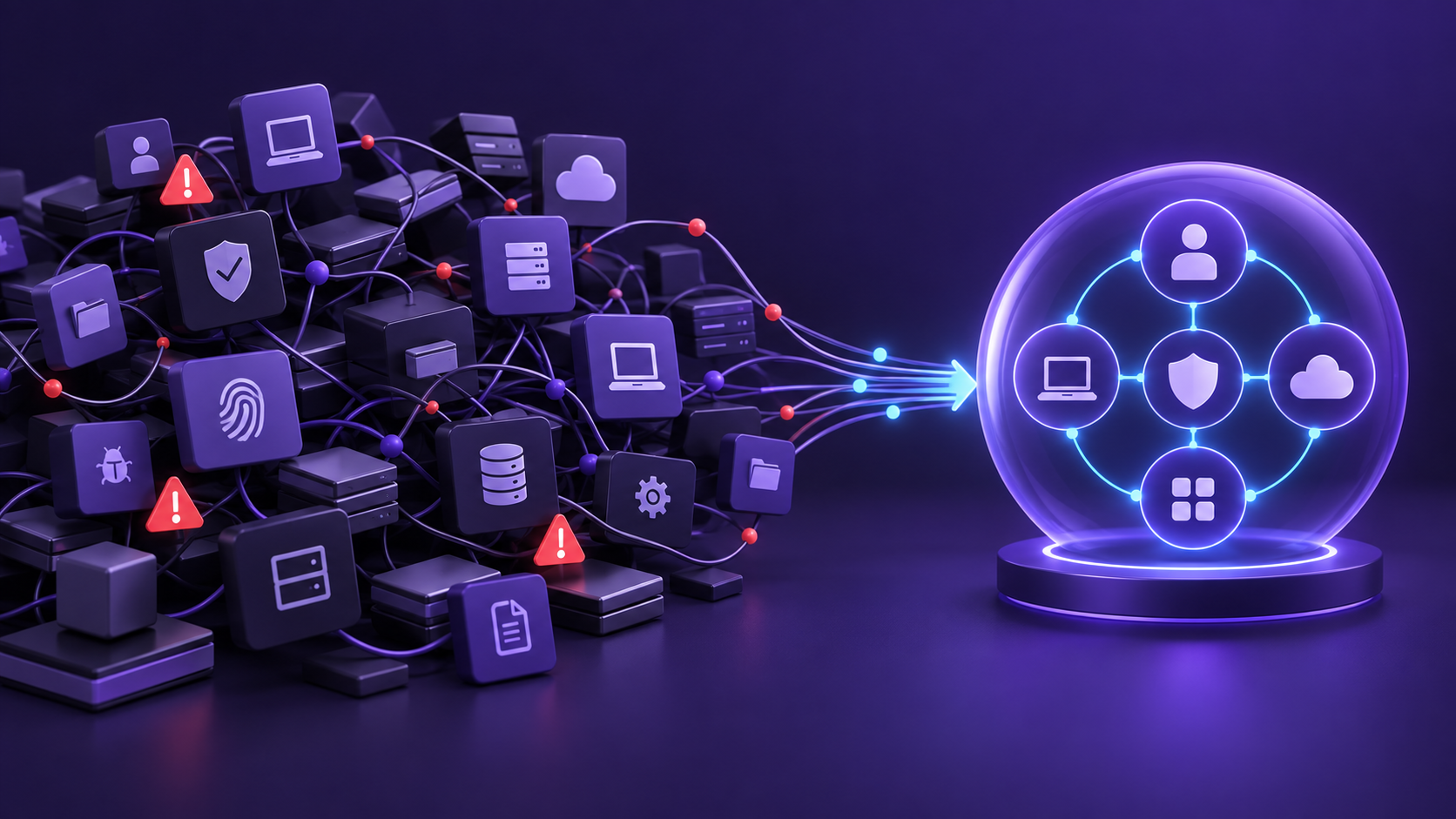
No single tool shows how all of those things connect.
That is why SMBs can spend real money on cybersecurity and still not know where they are exposed.
The issue is not always a missing tool.
Sometimes it is missing visibility.
Sometimes it is shelfware.
Sometimes it is overlap.
Sometimes it is a tool that was bought for the right reason but never configured correctly.
Sometimes it is five dashboards that all look fine by themselves while the business is still sitting on a real attack path.
Guardare was built for this problem.
We help organizations understand exposure across people, devices, software, identities, and controls.
Not once a year.
Continuously.
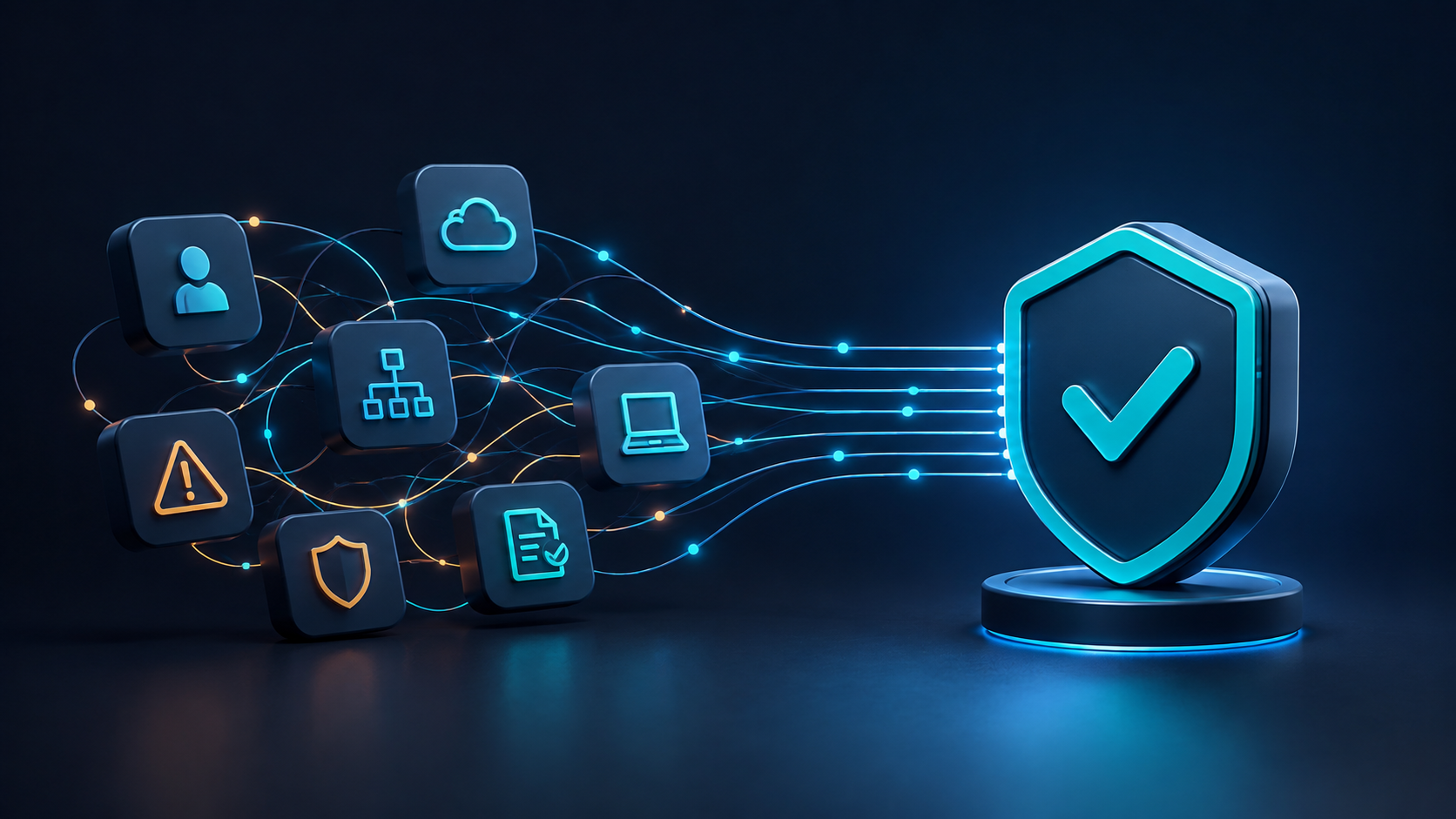
Guardare connects to the tools an organization already has and looks for the gaps that get missed when systems operate in silos. That includes breached credentials, risky users, unmanaged devices, misconfigurations, underused tools, security redundancies, stale access, and exposures that become more serious when combined.
The point is not to bury teams in alerts.
The point is to show what matters.
That could mean identifying a user whose password has appeared in a breach.
It could mean finding devices that are not properly enrolled or protected.
It could mean showing where security tools are not deployed the way leadership believes they are.
It could mean uncovering shelfware that is costing money without reducing risk.
It could mean showing that two or three low-level findings form a real attack path when viewed together.
That is the kind of visibility SMBs need now.
Not because audits are bad.
Because audits are not enough.
Yearly audits still have a place.
They help with compliance. They help with documentation. They help provide structure. They give leadership, customers, and insurers a way to understand security posture at a point in time.
But attackers do not operate on an annual schedule.
AI is reducing the time, cost, and skill required to find exposure. SMBs are attractive because they often have valuable systems without enterprise-level security resources. And the risks that matter most are usually not sitting neatly inside one dashboard.
They are spread across users, devices, software, access, and misconfigured controls.
That is why continuous exposure monitoring is becoming so important.
The companies that stay ahead will not be the ones with the most tools or the cleanest audit packet.
They will be the ones that know what is actually happening in their environment before someone else figures it out for them.
The Guard Posts is your go-to source for the latest cybersecurity news, industry events, and exclusive updates from Guardare.