What Are Cybersecurity Blind Spots?
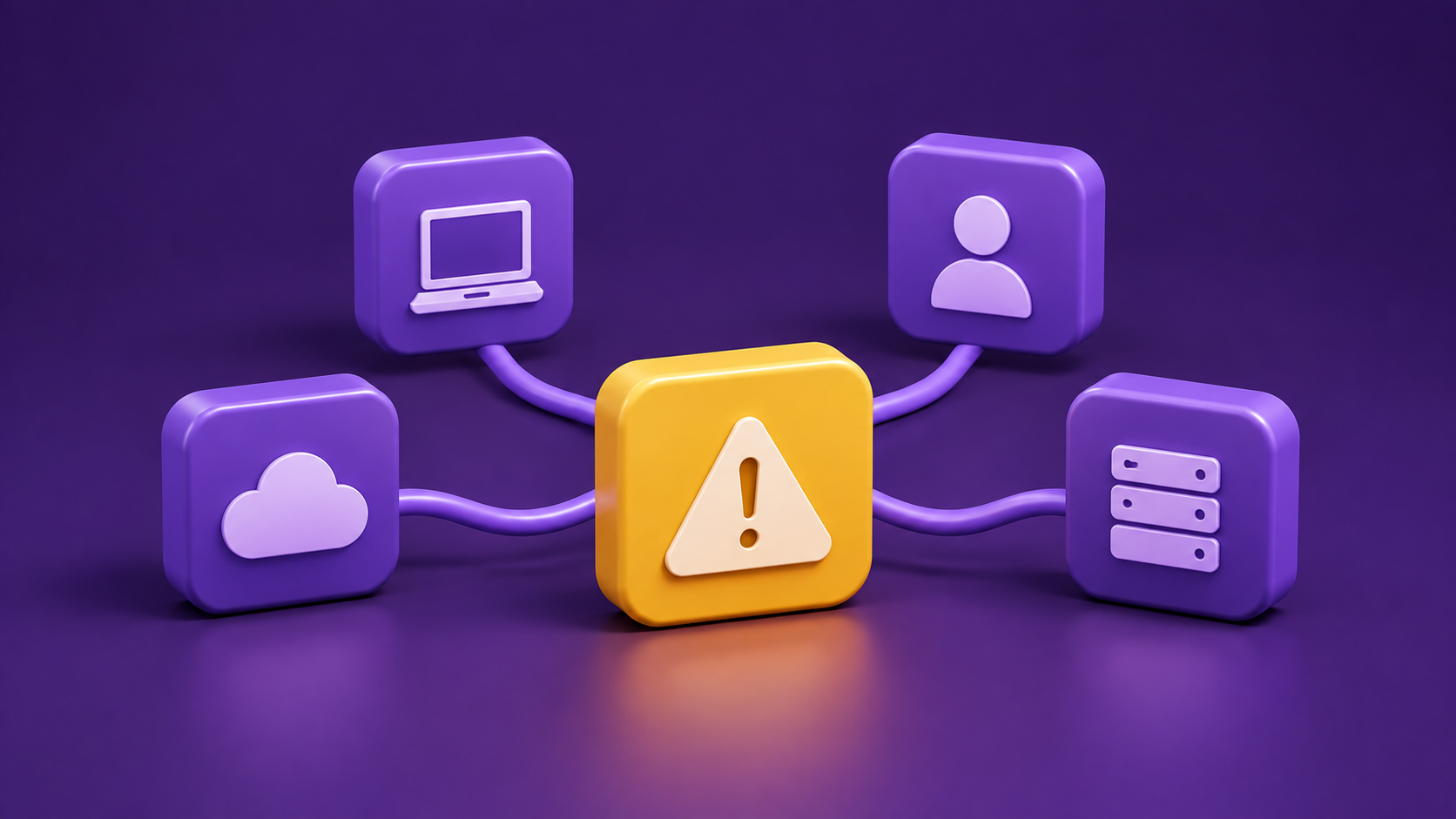
A blind spot is any area of your environment where you lack visibility into threats or vulnerabilities. These gaps exist because most security tools only see a narrow slice of your infrastructure.
Your EDR monitors endpoints. Your SIEM collects logs. Your cloud security watches workloads. Each tool does its job in isolation, but none of them can see how an attacker moves between layers.
Blind spots typically appear at the boundaries between these tools. They show up where user identity crosses into device behavior, or where cloud configurations overlap with endpoint policies.
Why Do Blind Spots Persist in Modern Security Environments?
Most organizations run dozens of security tools. According to a 2025 IBM Institute for Business Value study, the average organization manages 83 different security solutions from 29 vendors.
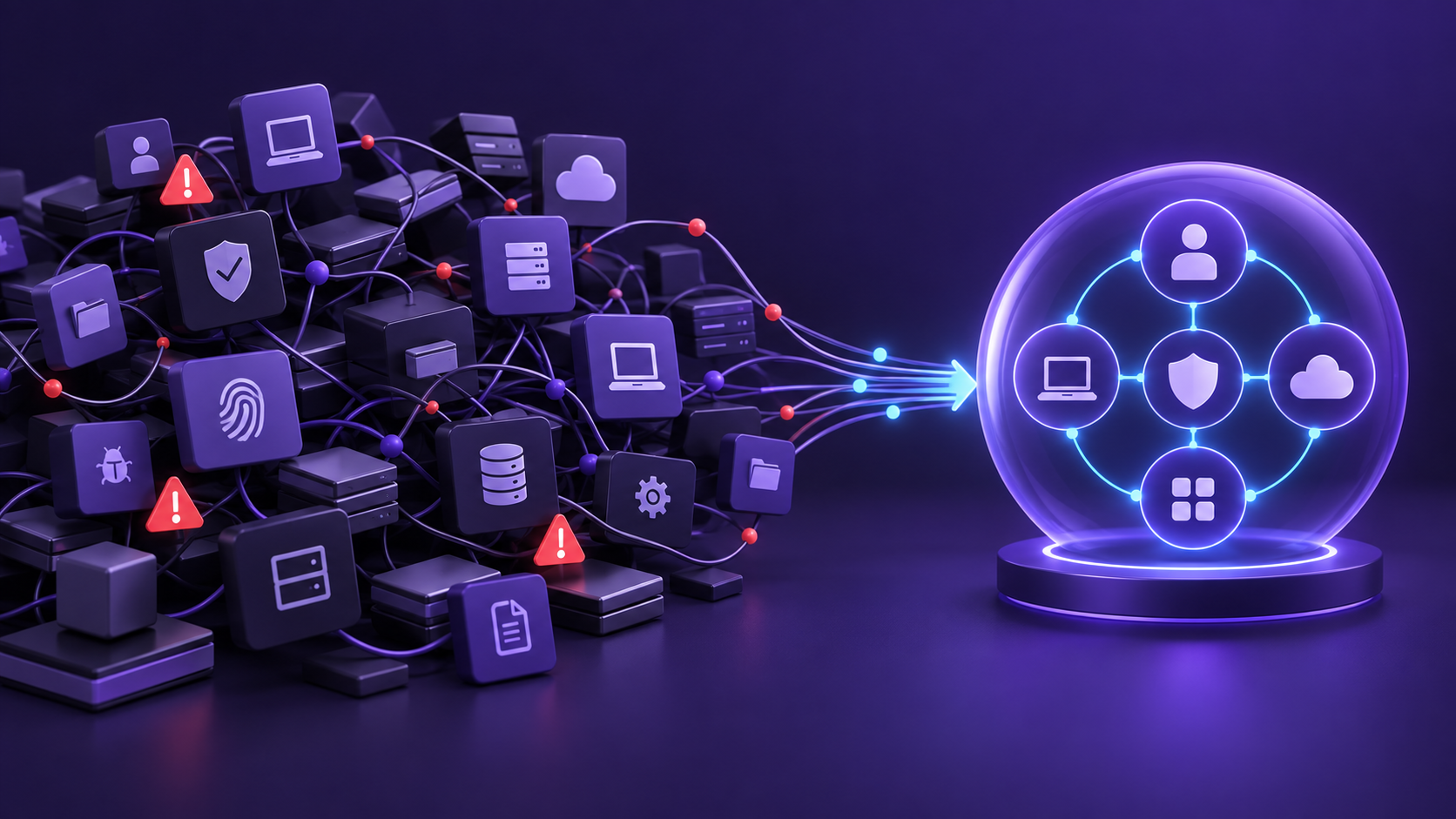
Each tool generates its own alerts, uses its own taxonomy, and stores data in its own format. The result is fragmentation. Your team spends time translating between dashboards instead of investigating real threats.
Tool sprawl also means redundant coverage in some areas and zero coverage in others. You might have three products monitoring your endpoints but nothing correlating identity signals with network traffic.
How Does a Unified Cybersecurity Platform Eliminate Blind Spots?
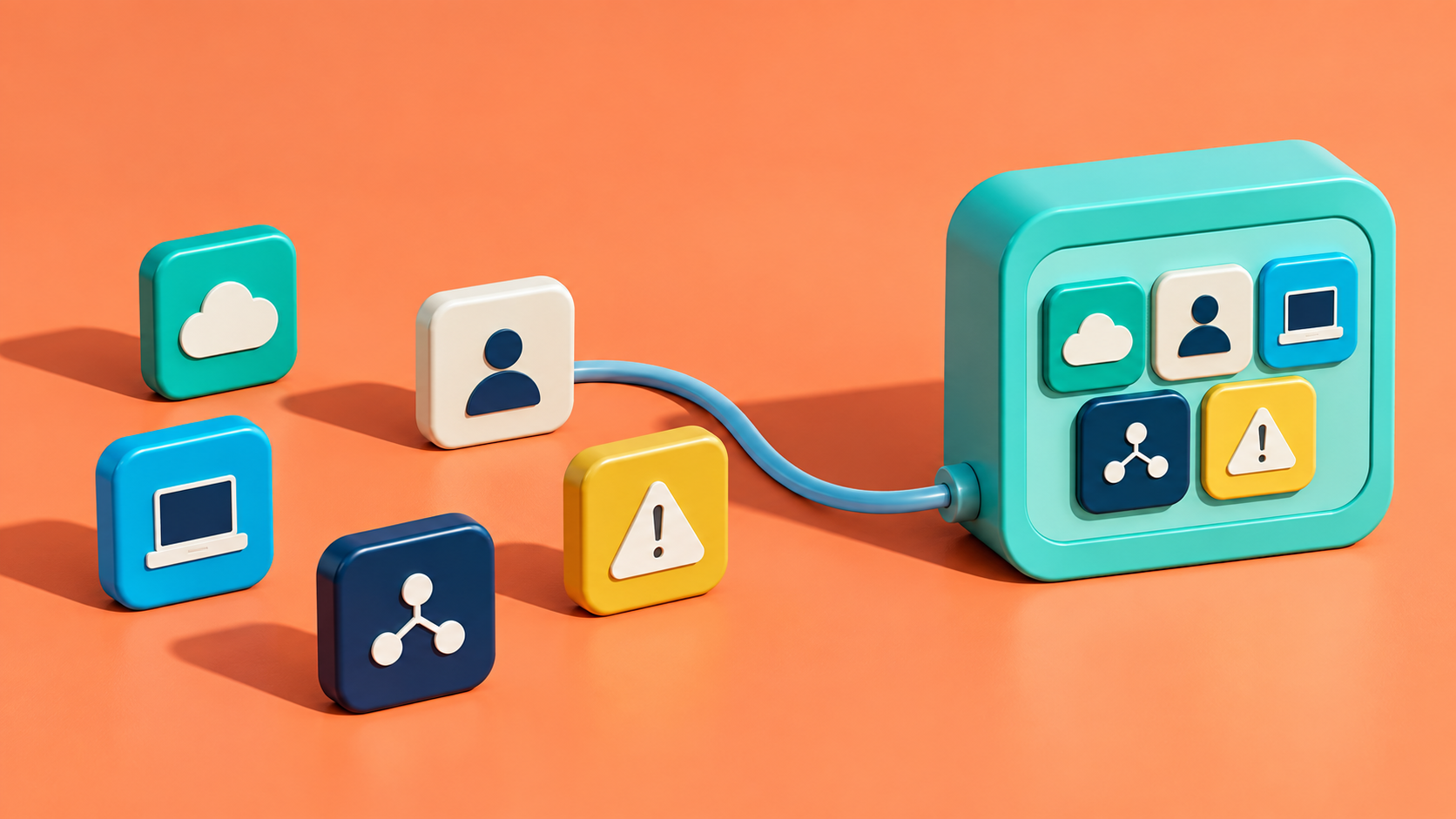
A unified platform ingests data from across your entire environment and normalizes it into a single data model. Instead of separate feeds with separate alert queues, you get one correlated view of risk.
This approach works by connecting three layers of telemetry:
- User telemetry: Login patterns, privilege escalation attempts, credential sharing indicators
- Device telemetry: Patch status, agent health, configuration drift, network connections
- Application telemetry: Cloud workload activity, SaaS access patterns, API behavior
When these data streams flow into one engine, the platform can identify attack chains that no individual tool could detect alone.
What Does Cross-User and Cross-Device Visibility Look Like?
True cross-layer visibility means your platform understands relationships. It knows which users log into which devices, which devices access which applications, and which applications connect to which cloud resources.
Guardare builds a unified risk graph that maps these relationships in real time. If a user's credentials get compromised and an attacker moves from a laptop to a file server, the platform tracks that path across both user and device telemetry.
This kind of visibility turns scattered alerts into a connected narrative. Your team stops asking "what happened?" and starts asking "what do we fix first?"
How Guardare Connects Your Security Stack to Reduce Blind Spots
Guardare integrates with the tools you already use. EDRs, firewalls, identity platforms, cloud infrastructure, and more all feed into one unified dashboard. The platform uses AI to analyze the combined data and prioritize risks by business impact.
Rather than replacing your existing tools, Guardare sits on top of them and finds what they miss individually. It flags misconfigurations, gaps in coverage, and exposure paths that only become visible when you look at the full picture.
In real-world assessments, Guardare has uncovered 57 devices marked as fully secure in internal reports that actually lacked proper protection. That's the kind of blind spot a single-tool approach can't catch.
What Role Does AI Play in Blind Spot Reduction?
AI amplifies the value of unified data. When a platform has access to user, device, and application telemetry simultaneously, machine learning models can spot anomalies that rule-based systems miss.
For example, AI can detect when a user's login pattern shifts in a way that correlates with unusual device behavior on the same network segment. That correlation is invisible if the identity tool and the endpoint tool operate in silos.
Guardare's AI goes a step further by validating findings with human expertise. This combination reduces false positives and ensures that the risks surfaced are genuine and actionable, not noise that wastes your team's time.
What Measurable Outcomes Can You Expect?
Organizations using unified platforms report significant improvements in detection and response metrics. The IBM IBV study found that platformized organizations reduce mean time to identify (MTTI) incidents by 72 days and mean time to contain (MTTC) by 84 days compared to fragmented environments.
They also see nearly four times better return on investment from their cybersecurity investments. Fewer tools to manage means less procurement overhead, fewer vendor contracts, and more time for your analysts to focus on actual threats.
In Conclusion: How to Start Closing Your Visibility Gaps
Blind spots aren't a technology failure. They're a fragmentation problem. When your tools don't talk to each other, attackers find the seams between them.
A unified cybersecurity platform solves this by correlating telemetry from users, devices, and applications into a single risk picture. Guardare makes this possible for SMBs and mid-market enterprises by integrating with your existing stack and surfacing the risks that matter most.
If you want to see exactly where your blind spots are, request a demo and find out what your current tools are missing.
FAQs about How Unified Cybersecurity Platforms Reduce Blind Spots
What causes cybersecurity blind spots in most organizations?
Blind spots form when security tools operate independently and don't share data. Each tool monitors one layer, so threats that move between users, devices, and applications go undetected unless you connect those signals.
How does Guardare help reduce monitoring blind spots?
Guardare connects your existing security tools into one unified risk view. Its AI engine correlates data from endpoints, identity systems, and cloud platforms to flag exposures that individual tools miss.
Can a unified platform work with my existing security tools?
Yes. Guardare integrates with EDRs, firewalls, IAM platforms, SIEMs, and cloud infrastructure through read-only connections. It enhances your current stack rather than replacing it, and most organizations complete setup in hours.
What is the difference between tool consolidation and platform unification?
Consolidation means reducing the number of vendors you use. Unification means connecting your tools so they share data and context. A unified approach keeps your trusted tools in place while adding a correlation layer on top.
How does cross-device visibility improve threat detection?
When your platform sees how devices relate to users and applications, it can trace attack paths across multiple assets. Guardare maps these relationships to detect lateral movement and credential misuse that single-device monitoring would miss.
.svg)